Back It Up Terry SVG: A Designer's Honest Review
Every now and then, an embroidery design lands in my inbox that makes me stop scrolling and double-tap. Back It Up Terry SVG is one of those files. On first glance, it hits a specific note that blends humor, holiday spirit, and a retro sort of charm. As someone who has stitched thousands of designs across custom apparel, handmade gifts, and small shop merchandise, I have developed a reflex for spotting which digital files will actually perform well under a needle and which ones will cause headaches. This one sits in a promising middle ground. Let me walk you through what this design feels like in practice, where it shines, and where you need to be careful before you stitch it onto a product you plan to sell or gift.
First Impressions: Mood, Shape, and Visual Personality
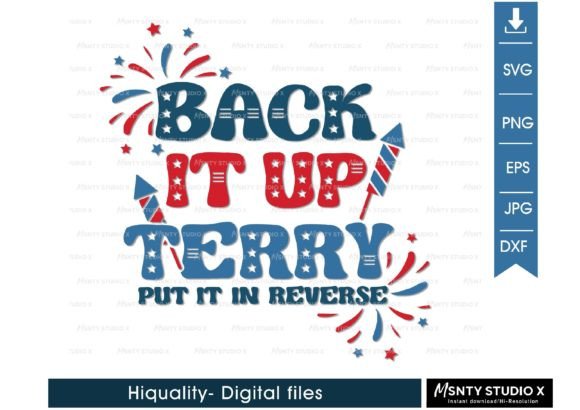
The first thing I noticed about Back It Up Terry SVG is its playful, almost cheeky confidence. The phrase itself carries a kind of irreverent humor that works perfectly for Fourth of July themes without being overly patriotic or cliché. The layout feels balanced but not stiff. The lettering has a casual, hand-drawn vibe that translates well into embroidery when the stitch path is set correctly. The design does not rely on tiny decorative elements that get lost in the wash. Instead, it uses bold shapes and clear spacing, which tells me the original vector work was done with real production in mind.
This is not a delicate, intricate pattern meant for lace or fine detail work. It is a statement piece. It wants to be seen from across the room. That makes it a natural fit for custom apparel like sweatshirts, t-shirts, and tote bags, but also for products that need a quick visual hook, such as embroidered patches, aprons, or pillow covers. The mood is confident, slightly funny, and very Americana without being overly sentimental. If you sell on Etsy or at craft fairs, this is the kind of design that makes people smile and then pull out their wallets.
Real-World Scenario: The Custom Sweatshirt Test
Let me paint a picture. I recently prepped a run of sweatshirt embroidery for a small batch of holiday shop merchandise. The client wanted something that felt fresh for Independence Day but not too serious. I loaded Back It Up Terry SVG into my software, checked the stitch density, and ran a test on a scrap piece of cotton jersey. The result was clean. The satin stitch on the thicker letters held its edge well, and the fill stitch areas did not pucker the fabric. The spacing between letters was generous enough that I did not need to worry about thread breaks or distortion when hooping the sweatshirt.
I ended up stitching it onto a cream-colored hoodie with red and blue thread colors. The contrast popped exactly the way I hoped. The design sat centered on the chest without overwhelming the garment. For a small business owner looking to add a limited-edition product to their lineup, this design delivers a finished product that looks intentional and professional. It does not scream "iron-on transfer." It looks like something a boutique would carry.
Where This Design Works Best
After testing Back It Up Terry SVG across several fabric types and product categories, I can confidently say it thrives in specific applications. Here is where I would use it without hesitation:
- Custom apparel: T-shirts, sweatshirts, hoodies, and denim jackets. The bold lettering holds up well on medium-weight woven and knit fabrics.
- Tote bags: Canvas or cotton tote bags benefit from the design's clean silhouette. It does not get lost in the fabric texture.
- Embroidered patches: If you sell patch sets or iron-on patches, this design translates beautifully into a standalone patch with a merrowed edge or a laser-cut border.
- Holiday gifts: Independence Day presents, hostess gifts, or even white elephant exchanges. The humor gives it a longer shelf life than a generic flag graphic.
- Boutique branding: If you run a small shop and want to release a limited run of holiday merchandise, this file works as a signature piece that customers will recognize.
- Printable mockups: For digital product sellers, the SVG cleans up well in mockup templates. You can show it on a t-shirt or a cap without needing to stitch a sample first.
Where You Should Use It Carefully
Not every surface is kind to this design. I learned that the hard way when I tried to hoop a lightweight baby onesie with Back It Up Terry SVG. The fabric was too thin to support the stitch density without buckling. If you plan to stitch this onto baby clothes or delicate knit fabrics, you will need a lightweight stabilizer and possibly a layer of tear-away backing to prevent show-through. Similarly, stretchy fabric like ribbed knits or spandex blends can distort the lettering if you do not use a cutaway stabilizer and a ballpoint needle.
Another area where I would pause is caps and hats. Curved surfaces can warp the spacing of the letters, especially if the design is wider than four inches. If you want to stitch this onto a cap front, reduce the scale slightly and test the curve alignment in your software before committing thread. The same caution applies to dark fabric. The design does not have an inherent outline or shadow layer, so you will need to choose thread colors that contrast sharply with the garment. A white or bright red thread on a black sweatshirt works fine. A navy thread on a dark blue shirt will disappear.
Visual Appeal, Stitching Clarity, and Product Value
When a customer picks up a handmade product featuring this design, the first thing they notice is the clarity. The letters are distinct, the spacing is even, and the overall shape feels intentional. That translates directly into customer trust. Shoppers are more likely to believe your handmade shop delivers quality when the embroidery is crisp and the design is well-placed. Back It Up Terry SVG gives you that advantage because the vector work is already clean. You do not have to spend hours cleaning up node points or adjusting path directions before you stitch.
From a giftability standpoint, this design works for both personal and commercial use. A friend would smile receiving a tote bag with this on it. A customer paying full retail price would feel like they got something unique. That dual appeal is rare in digital embroidery files, and it makes this SVG a stronger asset for your design library than many seasonal graphics that only work for one week of the year. The funny 4th of July SVG angle is the hook, but the real value is in how the design holds up over time. You could stitch it in June, sell it in July, and still use leftover stock for summer promotions without it feeling dated.
Practical Embroidery Designer Notes
Before you load Back It Up Terry SVG into your machine and start a production run, here are the steps I always take with a new design like this:
- Test on scrap fabric first. Stitch it out on a similar fabric weight to your final product. Check for puckering, thread breaks, and alignment issues.
- Check thread color contrast. View the design in black and white mockups first. If you cannot read the text clearly at arm's length, the contrast is too low. Adjust your thread palette accordingly.
- Review stitch density. Open the file in your embroidery software and look at the density map. If any area exceeds what your machine handles well, reduce the density or switch to a lighter stabilizer.
- Confirm hoop size. Measure the design dimensions against your hoop capacity. If the design is larger than your hoop, you may need to split the stitching or scale it down.
- Inspect small details. Look for thin lines, tight curves, or sharp angles that could cause thread breaks. The design should be clean, but every embroidery file benefits from a manual check.
- Test on light and dark backgrounds. Stitch the same design on a white fabric and a black fabric. See how the thread colors read differently. Adjust fill colors or add an underlay if needed.
- Use proper stabilizer. For medium-weight cotton, a tear-away stabilizer works fine. For knits or stretchy fabrics, use cutaway stabilizer. For patches, use a heavy-weight stabilizer or a fusible backing.
- Confirm licensing. Before you use the design for commercial embroidery or sell finished products, check the license terms that came with your digital download cut files. If the listing does not specify commercial use rights, contact the seller. Do not assume. Respecting licensing protects your craft business and your reputation.
How This Design Affects Your Brand and Buyer Engagement
Every design you stitch becomes part of your brand story. If you sell personalized gifts or run a small shop product line, the designs you choose communicate your taste to your customers. Back It Up Terry SVG tells your buyer that you have a sense of humor, that you pay attention to current trends, and that you are willing to take creative risks. That matters in a crowded marketplace. Shoppers remember the shop that made them laugh. They also remember the shop that delivered a finished product that did not peel, fade, or distort after the first wash. This design, when stitched correctly, helps you deliver on both fronts.
The professionalism of your embroidery reflects directly on the product value. A well-stitched design on a quality garment commands a higher price. Customers will pay more for a custom apparel item that looks like it was made in a professional studio rather than in a garage with a cheap machine. By using a clean SVG like this one, you are stacking the odds in your favor. The design does the heavy lifting. Your skill as an embroiderer finishes the job.
Final Thoughts Before You Stitch
I have tested dozens of 4th of July SVG files over the years, and most of them fall into two categories: overly complex patterns that cause thread nests, or boring clip art that nobody wants on their clothing. Back It Up Terry SVG sits in a sweet spot between those extremes. It is detailed enough to feel custom but simple enough to stitch reliably across multiple product types. Whether you are producing tote bag designs for a weekend craft fair or building a lineup of sweatshirt embroidery for your Etsy shop, this design gives you a strong visual anchor that customers will recognize and remember.
If you are a creative entrepreneur or a hobbyist looking to expand your embroidery project portfolio, I recommend giving this file a test run. Start with a single product. Stitch it out, photograph it, and see how it feels in your hands. If it fits your brand voice and your customer base, scale it. If not, you have only invested one hoop session and a few yards of thread. But if I had to bet, I think you will find yourself reaching for this SVG more than once. It is the kind of design that becomes a staple, not a one-off.
Back It Up Terry SVG is more than just a funny holiday graphic. It is a practical, production-ready embroidery file that respects your time, your machine, and your customers. Stitch it with confidence, and watch it work for your handmade product line.